
Then came the first materializations.
One night, when the moon was thin and the crowd had dwindled to a small cluster of night-watchers and one solitary street sweeper, Maren walked to the railing. Her hands bruised by age and absence. She held the filament she’d kept for weeks—thin and now warm under skin contact—and hummed, softly, a lullaby her mother had sung. The fissure responded. Not with a map this time, nor with an object, but with a memory that was not hers: a kitchen she’d never seen, sunlight through a window that did not conform to north or south, a table where multiple hands passed a cup back and forth, each hand slightly altered. The filament glowed more brightly than it ever had. The code of Xsonoro 514, for a sliver, was simple and naked as a child's truth: give what you love; receive what you do not yet know.
This time the fissure spidered—small breaks flaring across the polarized sky, tiny mirrors of the original incision. They were weak, ephemeral, but they responded to Xsonoro harmonics independently, like little mouths forming words. Panic stitched through the city. Were these contagions? Were they the fissure reproducing? The international task force convened under floodlights and long tables. They moved through bureaucratic choreography: redlines, safety protocols, contingency plans. Maren found the politeness of procedure almost obscene in the face of the sublime. She wanted to walk the seam and speak plainly to whatever intelligence watched.
The objects altered perception. When Maren lifted a filament and the image flared—an orchard where gravity wavered—the fissure hummed as if in approval. Scientists argued whether the items were artifacts or vectors. Religious leaders declared them miracles. Markets grew around them: auction houses with white gloves and security scanners; collectors with wallets like deep wells; private labs promising cures and insight in exchange for fragments of the phenomena. Horizon Cracked By Xsonoro 514
The tone carried more than pitch. Once filtered and slowed, it revealed cadence—like breathing—and underneath cadence, a scaffold of symbols that bent when you tried to read them. Linguists proposed proto-signals, bioacousticians suggested whale-song analogues, and codebreakers fed the stream into pattern‑recognition nets that returned strings of probable math: prime counts, modular rotations, fractal repeats. Nothing human fit perfectly. Everything human tried to hold the signal collapsed into variants of the same wordless insistence.
In the end, the horizon was never meant to be whole again—or perhaps it would never be the same kind of whole. The crack had become a door whose frame never stopped moving, and Xsonoro 514 was the music playing from within. Maren grew old with the filament nested in a drawer like a domestic secret. She taught her daughter to listen for frequencies that lived between breaths. The world adopted a new cosmology: one that began with a split and asked the question the fissure had posed back to it, in quieter voices now.
On the third week, the fissure pulsed in time with Xsonoro 514. It was subtle at first: a ripple like breath through fabric, edges flaring to reveal a second gradient of color inside the break—cold blues, electric golds—like a different weather system had set up shop within the wound. Cameras recorded changes that human eyes missed; the crack sang with the tone, resonating like a bell struck at the center of the world. Then came the first materializations
Xsonoro 514, if it could be named further, seemed to respond to intent. When researchers used controlled transmissions—mathematical pulses, standardised pictograms—there was a reciprocal modulation: the fissure replied with a brief cascade of harmonics and, once, with an arrangement of light that some interpreted as a crude map. When a child on the promenade hummed into the night, the crack rippled sweetly, like fabric touched by a feather. Phones fell silent in pockets near the edge; compasses spun like confused dancers; birds avoided the area with the uncanny wisdom of animals sensing storms.
And yet the fissure was not tamed. It had its own agenda, intermittently accommodating and relentlessly foreign. Sometimes it offered wonders: medicines that cured cells gone wrong, fabrics that remembered their weavers’ touch, songs that made the rain fall in patterns beneficial to crops. Other times it answered with riddles: cities of impossible geometry that made mathematicians feverish, languages that reshaped memory, voids that swallowed whole legacies and left behind only their shadow.
What do you bring?
What do you bring to a crack at the edge of reality that can show you the shape of other worlds? Cities sent gifts. Scientists sent instruments; priests sent doctrines; children sent songs. The Halos offered their code, broadcasted as open-source hope to whoever might be listening beyond the seam. Maren sent a photograph of her daughter on the day she learned to ride a bike—mud on the knees, grin crooked from concentration. She pressed the image to the palm of a filament and felt the fissure lean closer.
It answered with an exchange. The girl’s grin in Maren’s memory altered; it rippled into an echo of a face that had never existed on Earth. The filament warmed. A phrase, not in any human language but comprehensible in the way dreams are, threaded into Maren’s mind: Keep. Share. Remember.
Then the horizon cracked again.
The Halos’ signal was a lingua franca of mathematics and melody. It established a rhythm, and the fissure answered. For a breath, Maren thought it was friendly. A bridge of light extended halfway across the opening—a slender walkway like a spine. Maren could see shapes moving on that spine, and they were neither creature nor machine as defined by human language; they were arrangements of possibility, bodies suggesting decisions. The fixtures of the city—towers and fast arcs of light—turned toward the walkway.
What do you bring?



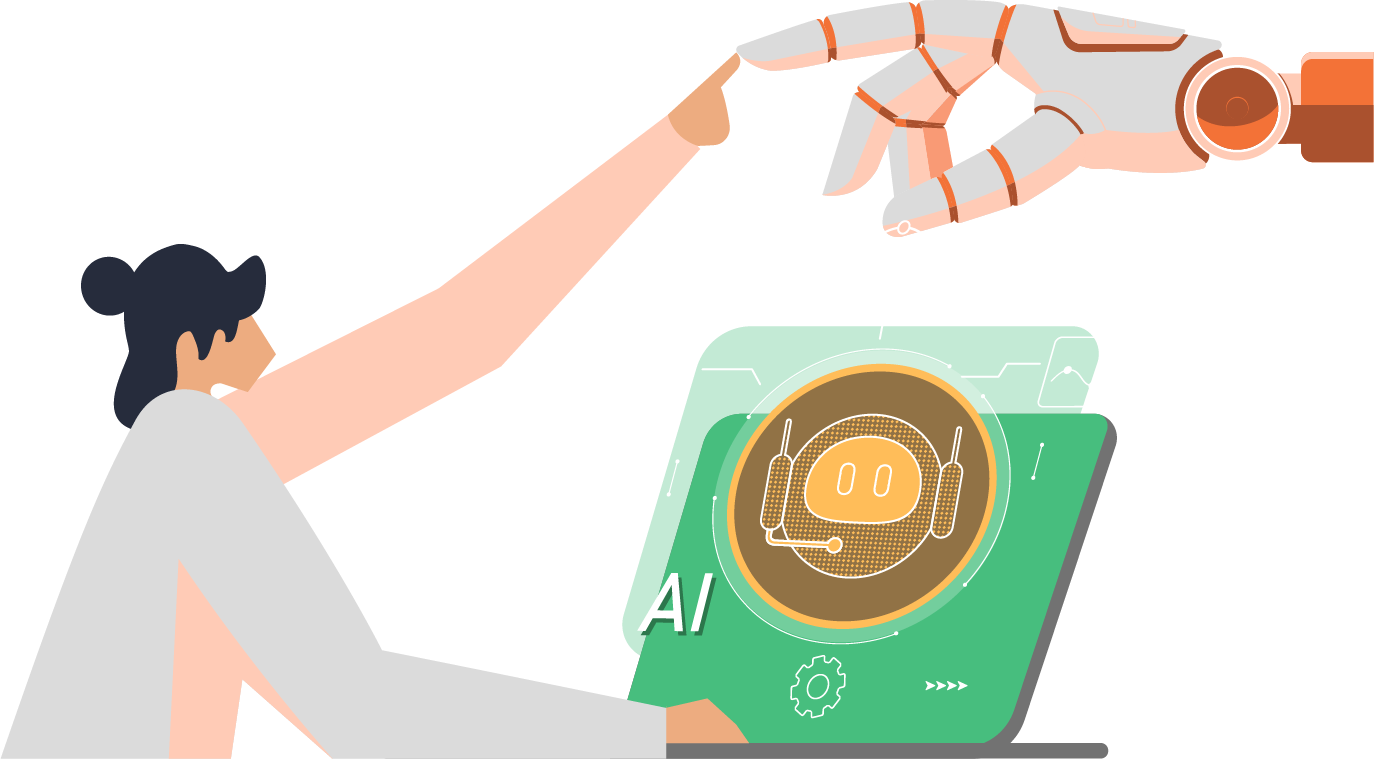
This comprehensive guide provides everything you need to get your organization ready for and successfully deploy Copilot.

SYDNEY, WEDNESDAY 20TH APRIL 2022 – We are proud to announce that Insentra has achieved the ISO 27001 Certification.